Sclerosis of the heart
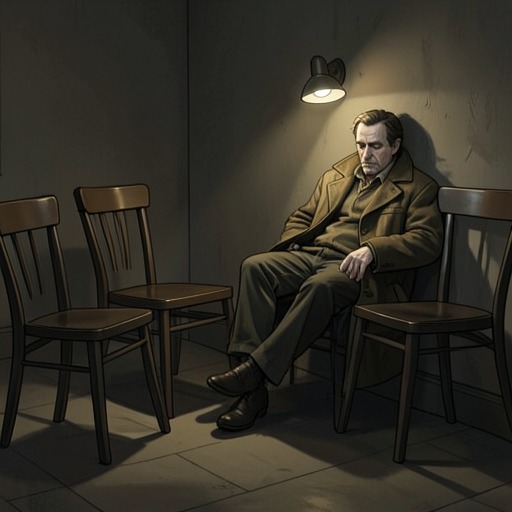
Doctor ZhivagoSclerosis of the heart is the condition Yurii Andreievich names shortly before his death, giving a physical diagnosis to what he understands as the bodily cost of sustained moral falsification. He associates it with microscopic cardiac hemorrhages and with a society in which people are compelled to deny their convictions; when he later collapses in Moscow, the illness becomes the immediate cause of his death and the final convergence of his medical knowledge with his critique of life under coercion.
Diagnosis and Self-Understanding
In a conversation with Misha Gordon and Innokentii Dudorov, Yurii insists that his condition is real, not a figure of speech. He says that the walls of the heart muscle wear thin and may one day burst, and emphasizes that he is not yet forty and has not brought the illness on through drunkenness or excess. Gordon dismisses the danger, assuring him that he will outlive them. Yurii counters that microscopic cardiac hemorrhages have become common and are not invariably fatal, while describing sclerosis of the heart as a characteristic modern disease.
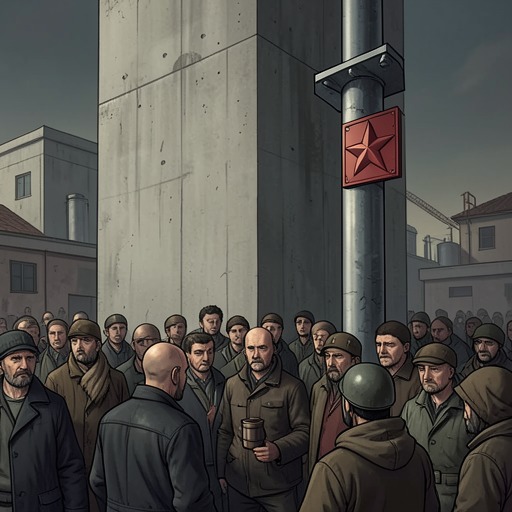
Yurii’s account moves from clinical language to a moral explanation. He believes that the condition’s causes are largely moral because people are required to live through constant, systematic duplicity: saying the opposite of what they feel, submitting to what they dislike, and celebrating what brings misfortune. The nervous system, he argues, is part of the physical body, and the soul is no less real for being inward. Repeated violation of that inward life, in his view, cannot leave the body unharmed. His diagnosis therefore joins physiological vulnerability to the psychological damage of forced conformity without reducing one to the other.
A Critique of Re-education
Yurii’s argument sharpens when he recalls Dudorov’s account of being re-educated in jail and emerging mature. He says it was painful to hear, comparing the story to a circus horse explaining how it had broken itself in. The comparison makes the apparent success of political reformation sound instead like the destruction of resistance: adaptation has been achieved, but at the cost of an individual’s integrity.
Gordon defends Dudorov, suggesting that Yurii has grown unused to ordinary human words. Yurii allows that this may be so, but does not retract his objection. The disagreement connects his heart condition to a wider conflict over what counts as recovery or maturity in a coercive society. What one person presents as political improvement, Yurii hears as self-violation; his illness gives bodily stakes to that disagreement, while the scene leaves intact the tension between his diagnosis and his friends’ attempts to reassure him.
The Fatal Attack
Later, on a trolley in Moscow, Yurii feels an attack of nausea and tries to open a window. A violent storm is passing outside, but the window is fastened with screws. People tell him this, yet he is too distressed to understand their words and continues pulling at the straps. He feels a sharp pain and recognizes that something irreversible has happened. The familiar, practical obstacle of a window that cannot be opened becomes the immediate setting for the crisis he had feared.
Yurii forces his way through the crowded carriage and onto its rear platform. For a moment, the fresh air seems to revive him, and he thinks that he may recover. He then squeezes through the crowd, steps down from the stationary trolley into the street, takes several steps, and falls onto the paving. He does not rise again. People gather and discover that he is no longer breathing and that his heart has stopped. The narrative presents the death as the culmination of the heart’s failure he had described, not as a separate illness introduced at the moment of his collapse.
Meaning and Narrative Function
The illness carries a deliberate tension between medical explanation and ethical interpretation. Yurii speaks as a doctor, naming a physical process and distinguishing a potentially fatal episode from one that can be survived; he also reads the condition as evidence that the body cannot endure a life organized around habitual contradiction without consequence. The text supports that as his understanding of the disease, rather than as a general medical claim.
His death gives that understanding a final, painful force. The attack occurs amid the ordinary inconveniences and crowding of urban life: the stuck trolley, the fastened window, and the people who block his way as he tries to reach the air. The novel’s attention to those circumstances places his private bodily crisis inside a shared public space, while the brief sense that he may be better makes the collapse more abrupt. Sclerosis of the heart thus names both the physical failure that ends Yurii’s life and the moral injury he believes a life of systematic duplicity inflicts.